
Exterior Trim and Door Painting
Professional exterior trim and door painting with cleaning, repairs, sanding, priming, caulking, and weather-resistant finishes across California, Oregon, Washington, and Florida.
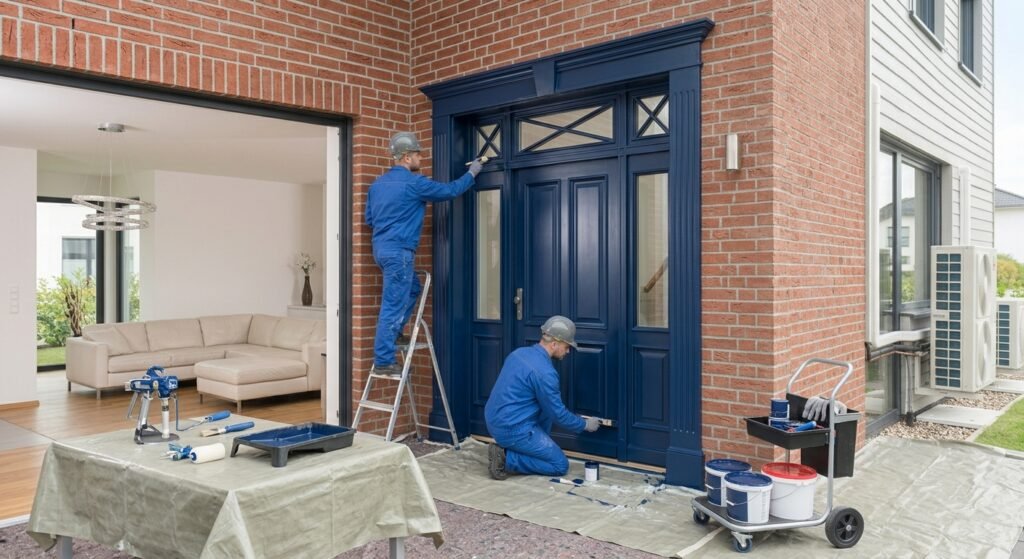
House Painting Specialists paints exterior trim and doors on wood, fiberglass, steel, aluminum, and previously coated surfaces, with inspection, cleaning, scraping, sanding, minor repairs, priming, caulking, and final detailing as part of the scope. Trim frames windows, doors, rooflines, porches, and architectural features, and entry doors take frequent contact plus direct sun, rain, and temperature swings, so preparation is what keeps the finish adhered and smooth. We evaluate surface material, existing coating, moisture condition, and manufacturer requirements before recommending a system, and can coordinate this work with full exterior painting services to keep colors consistent across the home.
What Exterior Trim and Door Painting Can Do
Fresh trim and door paint sharpens exterior lines, improves color coordination, and protects exposed building materials, while a carefully chosen finish also supports easier cleaning around handles, frames, and other frequently touched surfaces. It cannot repair rotten wood, damaged door skins, failed flashing, or structural movement, so we identify repair needs before coating and keep painting work separate from carpentry or building-envelope repairs.
- Refresh faded or chalked colors
- Cover peeling or cracked coatings
- Protect exposed wood
- Seal repaired trim sections
- Improve front-entry appearance
- Create contrast against siding or masonry
- Coordinate garage doors and entry doors
- Highlight architectural details
Exterior Trim Painting
Trim often shows coating failure before broad wall surfaces because narrow joints, end grain, fastener points, and horizontal ledges collect moisture, and south-facing or west-facing trim also takes more ultraviolet exposure.
| Trim Area | What to Know |
|---|---|
| Fascia and soffit | Roof-edge boards show gutter overflow and roof-leak damage first. Soffit vents must stay clear so attic airflow is not blocked by paint buildup. |
| Window trim | Loose paint removed, edges sanded, exposed material primed, and failed paintable caulk replaced. Sashes, tracks, and drainage openings need to keep moving freely after painting. |
| Door frames and casings | Joints around casings and thresholds are checked before prep. Paintable sealant closes selected gaps but never covers drainage paths or moving joints. |
| Columns, shutters, and decorative trim | Grooves, edges, and shadow lines get worked by brush. Shutters may come off for full cleaning; material (wood, vinyl, composite, metal) controls prep and primer choice. |
Exterior Door Painting
House Painting Specialists paints front doors, side-entry doors, patio doors, garage service doors, and compatible exterior door systems. Door material identification guides every preparation and coating decision, since wood, fiberglass, and steel react differently to moisture, sanding, heat, and primer.
| Door Material | What to Know |
|---|---|
| Wood doors | Cleaned, sanded, and repaired at open joints and exposed grain, then primed and finished with an exterior-grade coating. Bare knots and pitch streaks get targeted stain-blocking primer. |
| Fiberglass doors | Smooth doors usually take paint; wood-grain textured doors can take a compatible stain system. Cleaning, light sanding, and a compatible primer support adhesion. |
| Steel and metal doors | Cleaned, treated for rust, and sanded at coating edges before a compatible metal primer. Exposed bare metal gets primed promptly to prevent surface rust. |
| Garage doors | Cleaned, sanded at rough coating edges, and painted without restricting panel movement. Paint stays clear of warning labels, sensors, rollers, tracks, springs, and electrical parts. |
The Exterior Trim and Door Painting Process
- Surface and coating inspection. The crew identifies wood, engineered wood, fiberglass, steel, aluminum, vinyl, composite, and previous coating systems, and checks peeling, chalking, rust, cracked joints, damaged caulk, and door operation.
- Color and finish planning. Trim colors can match the exterior, create contrast, or highlight architectural details. Satin and semi-gloss usually suit trim and doors, and House Painting Specialists confirms color, sheen, and compatibility before starting.
- Protection and hardware preparation. Drop cloths and masking protect siding, masonry, roofing, windows, glass, floors, and landscaping. Handles, locks, kick plates, and weather seals are removed or masked as the scope requires.
- Cleaning and surface preparation. Dirt, pollen, chalk, grease, and hand-contact residue are removed, with extra degreasing near handles. Once dry, the crew scrapes loose paint and sands coating edges, including glossy coatings that need abrasion for adhesion.
- Minor repairs and caulking. Small holes and shallow imperfections get filled and failed paintable caulk gets replaced, while movement gaps, drainage openings, and ventilation paths stay open. Structural decay or damaged frames go to a carpentry or building-envelope repair first.
- Primer application. Primer selection follows surface material and condition. Spot primer covers localized bare areas; a full primer coat supports extensive repairs, major color changes, or material transitions.
- Exterior paint application. Brushes give control around profiles, panels, joints, and hardware, rollers cover broad door faces, and spray suits detached components in a protected area. House Painting Specialists follows manufacturer film thickness, coat count, and recoat timing.
- Final inspection and cleanup. Coverage, color consistency, brush marks, and edges get checked, protective materials come off, and approved hardware is reinstalled once the coating has cured enough to handle contact.
Lead-Safe Preparation for Pre-1978 Properties
Exterior trim and doors on older properties may carry lead-based paint beneath newer layers, and scraping, sanding, drilling, or component removal can create contaminated dust or chips. EPA guidance states that renovation, repair, or painting work in pre-1978 housing can create hazardous lead dust and recommends lead-safe certified contractors for covered projects. House Painting Specialists verifies project age, testing requirements, contractor certification, containment, cleanup, and disposal responsibilities before disturbing suspect coatings, and treats state or local rules as additive to federal standards. A certified lead inspector or risk assessor can test suspect surfaces directly.
What Affects the Cost of Trim and Door Painting
| Factor | Effect on Cost |
|---|---|
| Number and size of doors | More doors and larger panels add material and labor time |
| Door material and design | Wood, fiberglass, and steel each need a different prep and primer system |
| Trim width and detail | Wider trim and decorative profiles take longer to cut in and back-brush |
| Surface condition | Existing coating failure, stripping needs, decay, or corrosion add prep time |
| Caulking and repairs | Failed caulk replacement and minor repairs are priced ahead of primer |
| Hardware and access | Hardware removal and reinstallation, plus building height and access, add labor |
| Lead-safe requirements | Pre-1978 properties may need certified containment, cleanup, and disposal steps |
Review the house painting cost guide for broader pricing context across every exterior surface.
Exterior Trim and Door Maintenance
Annual inspection can catch peeling paint, open joints, exposed wood, rust, fading, cracked caulk, and moisture staining before failure spreads. Keeping gutters, flashing, and drainage systems functional protects fascia boards and window casings even after professional painting, since repeated water exposure damages both over time. Door maintenance should stick to gentle cleaning around handles, panels, and lower edges, since harsh abrasives can dull or scratch the coating. Sun-facing doors and trim tend to fade faster than shaded surfaces, so early maintenance heads off complete stripping or extensive repair.
Related Exterior Painting Services
Trim and door painting is often coordinated with other exterior work to align colors and reduce duplicated site setup: exterior painting, deck and fence painting, exterior brick painting, stucco painting, and siding painting.
Service Areas
California · Oregon · Washington · Florida
Project availability depends on property location, surface condition, access, weather, project size, and contractor scheduling.
Frequently Asked Questions
How often does exterior trim need repainting?
Exterior trim commonly needs repainting after fading, peeling, cracking, exposed wood, or failed caulk appears. Sunlight, moisture, material type, preparation quality, and previous coating condition control the maintenance interval.
Can painters paint a front door without removing the door?
Yes, many entry doors can be painted while installed. Complex repairs, extensive stripping, spray application, or complete edge coverage may require temporary removal.
Does exterior door painting require primer?
Bare wood, exposed metal, rust repairs, stains, patched areas, fiberglass, and major color changes often require primer. Sound compatible coatings may only need cleaning and sanding.
Can painters paint fiberglass and steel doors?
Yes, after material-specific cleaning, sanding, and priming. Door manufacturer instructions control coating type, approved colors, and preparation.
Should exterior trim receive caulk before painting?
Failed paintable caulk gets replaced at suitable trim joints before finish coats. Drainage openings, ventilation paths, moving joints, and manufacturer-required gaps stay open.
How long does exterior trim and door painting take?
Many trim and door projects take one to four days for cleaning, drying, preparation, priming, painting, and curing. Building size, repair needs, weather, and access can extend the schedule.
Can painters work on trim with lead-based paint?
Certified contractors can handle covered renovation work under applicable lead-safe rules. Pre-1978 properties require project screening, containment, controlled preparation, cleanup, and compliance with federal, state, and local requirements.
House Painting Specialists handles trim and door inspection, cleaning, scraping, sanding, minor repairs, priming, caulking, and painting. Request a free estimate to get coating requirements, color options, project timing, and preparation needs in writing.
Ready to Get Started?
Call us or request your free, no-obligation estimate today.