
Brick Painting
Professional exterior brick painting with masonry cleaning, mortar repair coordination, efflorescence treatment, priming, limewashing, and finish-coat application across California, Oregon, Washington, and Florida.
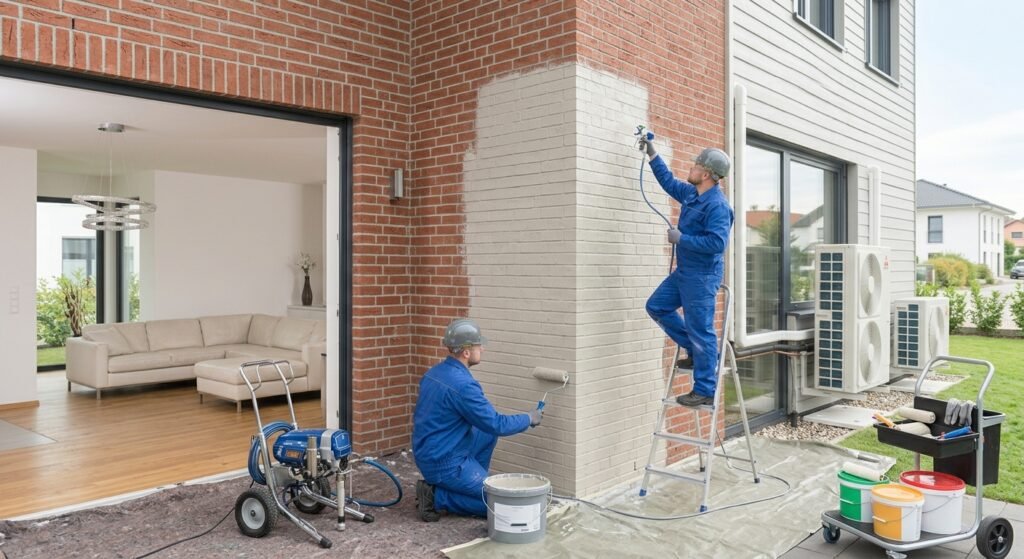
House Painting Specialists paints exterior brick, brick siding, columns, entryways, chimneys, and foundations, with cleaning, efflorescence removal, mortar repair coordination, masonry priming, painting, and limewashing available as part of the scope. Brick and mortar are porous, so moisture exposure, mortar condition, and coating choice matter more here than on siding or trim, which is why we evaluate condition, previous coatings, and finish goals before recommending a system. Full exterior painting services can be coordinated alongside brick work to keep colors consistent across the whole home.
What Brick Painting Can Do
Brick painting updates outdated color, creates a consistent exterior palette, and coordinates masonry with siding, trim, doors, shutters, and roofing. An opaque coating can also cover permanent discoloration, repaired sections, and uneven color variation. It does turn a low-maintenance surface into a coated one that needs future inspection and repainting, so we do not recommend painting over unresolved water intrusion, damaged mortar, loose brick, or active efflorescence. Repairs and moisture corrections come before primer and paint.
- Change outdated brick colors
- Create a consistent exterior palette
- Cover permanent color variation
- Coordinate masonry with exterior trim
- Refresh previously painted brick
- Highlight architectural details
- Support a broader exterior renovation
Brick Surfaces We Paint
| Surface | What to Know |
|---|---|
| Brick siding and veneer | Cleaned, dried, repaired, and primed before compatible masonry paint. Weep holes must stay clear so moisture can still leave the wall assembly. |
| Full-brick exterior walls | Broad masonry areas need brushes, masonry rollers, or spray with back-rolling, plus a maintained wet edge across large elevations to avoid visible color breaks. |
| Brick columns and entryways | Corners and deep mortar joints get worked by brush. Areas near landscaping or irrigation are checked for moisture staining and growth first. |
| Brick chimneys | Crowns, flashing, mortar joints, and caps are inspected first. A masonry professional repairs structural or water management defects before any paint goes on. |
| Previously painted brick | Checked for peeling, blistering, chalking, cracking, fading, and mildew. Localized failure gets scraped and spot primed; widespread failure points to a moisture or adhesion problem. |
Brick Paint, Limewash, and Masonry Stain
Paint, limewash, and masonry stain create different looks and carry different maintenance needs, so surface history and design goals guide the choice.
| Finish | What It Does |
|---|---|
| Exterior brick paint | Opaque, consistent color. Acrylic or mineral masonry coatings suit brick when the product spec matches the surface and exposure. Covers color variation but needs future maintenance. |
| Limewash | Mineral finish with natural variation and visible brick character. Bonds to clean, absorbent, unpainted masonry. Previously painted or sealed brick usually needs extra prep to accept it. |
| Masonry stain | Penetrating mineral stain that changes color while preserving more natural variation than opaque paint. Cannot conceal every repair or existing stain. |
| Whitewashed look | A translucent finish that lets some original brick color show through. Limewash, diluted coatings, and specialty products each create a different effect, so a sample section confirms the result first. |
The Brick Painting Process
- Brick and mortar inspection. The crew checks brick faces, mortar joints, old paint, efflorescence, cracks, stains, and moisture patterns, plus flashing, weep holes, and roofline connections.
- Area protection and access planning. Roofing, windows, doors, trim, fixtures, concrete, and landscaping get masked. Ladders, scaffolding, or lift equipment are arranged for high walls and chimneys.
- Masonry cleaning. Dirt, growth, chalk, and loose coating are removed with controlled pressure, suitable nozzles, and masonry cleaners so soft brick or mortar is not eroded.
- Efflorescence and moisture correction. Salt deposits are fully removed rather than painted over, and any recurring moisture source gets investigated first.
- Mortar and surface repairs. A qualified masonry contractor repoints joints, replaces brick, and completes structural repairs, with new mortar given adequate curing time before coating.
- Drying and weather assessment. Brick reaches suitable dryness before primer, with surface temperature, air temperature, and rain exposure guiding the schedule.
- Masonry primer application. A compatible primer or conditioner seals porous areas and evens out absorption, worked into joints and texture by brush, roller, or spray.
- Finish coat application. The selected masonry coating goes on by brush, roller, or spray per the approved sample, coat count, and manufacturer spread rate.
- Final inspection and cleanup. Coverage, color consistency, and repaired areas get checked, weep holes and vents are confirmed clear, and the site is cleaned up.
Moisture and Efflorescence Risks
Brick and mortar absorb moisture from rain, irrigation, leaks, rising damp, and failed flashing. An unsuitable coating can slow moisture release and contribute to blistering, peeling, salt deposits, or masonry deterioration. Efflorescence signals moisture movement rather than a simple paint stain; cleaning removes visible deposits, but recurring deposits mean the moisture source itself needs correcting, which is a job for a roofing, masonry, or building-envelope professional rather than paint.
Painted Brick Maintenance
Painted brick needs periodic cleaning and inspection. Watch for peeling, blistering, chalking, fading, cracks, open mortar joints, mildew, and recurring efflorescence. Gutters, downspouts, flashing, sprinklers, and grading all direct moisture toward masonry, so correct water management reduces coating stress and repeat staining. Small coating failures caught early prevent broader paint loss across an elevation.
What Affects the Cost of Painting Brick
| Factor | Effect on Cost |
|---|---|
| Brick square footage | Total masonry area is the base driver of labor and material cost |
| Height and access | Chimneys, upper stories, and hard-to-reach elevations need ladders, scaffolding, or lift equipment |
| Surface prep needs | Coating removal, mildew treatment, and efflorescence removal add time before any paint goes on |
| Mortar repair | Repointing and brick replacement by a masonry contractor are priced and scheduled separately, with curing time before coating |
| Texture and mortar depth | Deeper joints and rougher texture take longer to brush, roll, or spray evenly |
| Coating selection | Paint, mineral stain, and limewash carry different material costs and application methods |
| Architectural detail | Columns, chimneys, and multiple colors add cutting-in time beyond flat wall coverage |
For a full pricing breakdown, see our brick painting cost guide, or the broader house painting cost guide for context across every exterior surface.
Best Weather for Brick Painting
Dry weather supports masonry preparation and coating performance. Recent rain, high humidity, cool temperatures, and approaching storms can delay cleaning, priming, or painting. Direct sunlight heats masonry and speeds drying during application, so crews often schedule work around shade and sun movement for consistent coverage. House Painting Specialists follows the coating manufacturer's limits for air temperature, surface temperature, humidity, and rain exposure ahead of general seasonal guidance.
Related Exterior Painting Services
Brick painting is often coordinated with other exterior work to align colors and reduce duplicated site setup: exterior painting, deck and fence painting, exterior trim and door painting, stucco painting, and siding painting.
Service Areas
California · Oregon · Washington · Florida
Project availability depends on property location, masonry condition, weather, project size, access, and contractor scheduling.
Frequently Asked Questions
Should exterior brick receive paint, stain, or limewash?
Paint creates opaque color, masonry stain preserves more natural variation, and limewash creates a breathable mineral finish with an aged look. Brick condition, previous coatings, absorption, and design goals guide the choice.
Does brick require primer before painting?
Bare brick usually requires a compatible masonry primer before acrylic paint. Limewash and some mineral coatings follow different preparation requirements, so the product specification guides primer use.
Can painters coat brick with efflorescence?
No. Efflorescence should be removed and the moisture source identified before coating. Paint applied over active salt deposits can lose adhesion and develop recurring stains.
How long does exterior brick painting take?
Many brick painting projects take three to seven days for cleaning, drying, repairs, priming, painting, and curing. Building size, weather, access, mortar work, and coating removal can extend the schedule.
Can painted brick return to natural brick?
Paint removal from porous brick can require chemical stripping, controlled blasting, or repeated cleaning, and full color restoration may not be possible. Treat brick painting as a long-term finish decision.
How often does painted brick require repainting?
Repaint frequency depends on moisture exposure, sunlight, coating type, preparation quality, masonry condition, and local climate. Regular inspection catches chalking, fading, peeling, or open mortar joints before broader failure sets in.
Can House Painting Specialists repair damaged mortar?
We identify damaged mortar during the painting assessment, but a qualified masonry contractor should complete repointing, brick replacement, structural crack repair, and major water intrusion corrections before painting begins.
House Painting Specialists handles brick inspection, cleaning, efflorescence treatment, preparation, masonry priming, painting, limewashing, and final detailing. Request a free estimate to get finish options, repair requirements, project timing, and maintenance expectations in writing.
Ready to Get Started?
Call us or request your free, no-obligation estimate today.