
Deck and Fence Painting
Professional deck and fence painting with cleaning, repairs, sanding, priming, staining, and weather-resistant finishes across California, Oregon, Washington, and Florida.
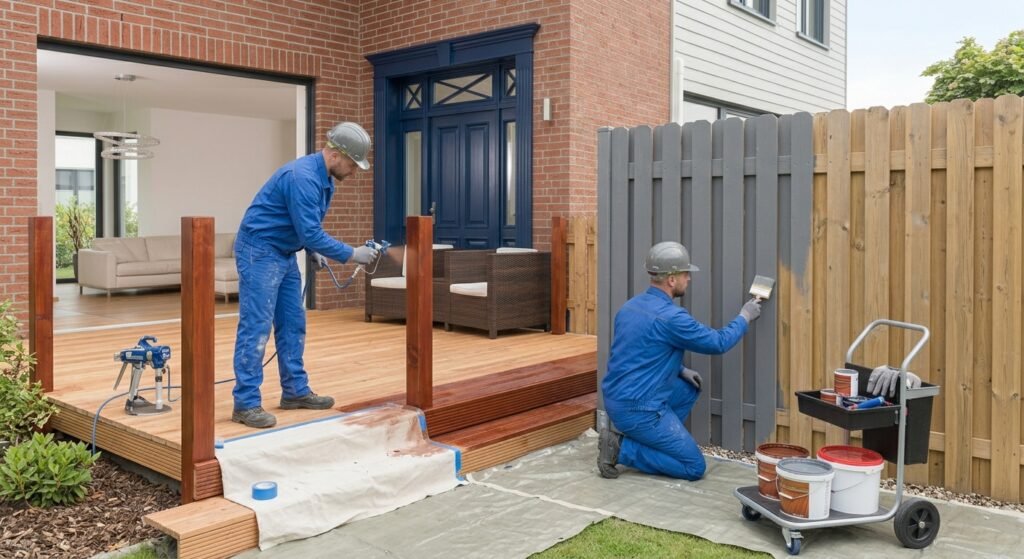
House Painting Specialists paints and stains decks and fences built from wood, composite, metal, and previously coated surfaces, with inspection, cleaning, coating removal, repairs, sanding, priming, painting, and staining available as part of the scope. Decks and fences take direct sun, rain, moisture, temperature swings, dirt, and biological growth head on, and horizontal deck boards also collect standing water under constant foot traffic, so preparation is what keeps a coating bonded and even. We evaluate surface material, existing coating, wood condition, moisture, and exposure before recommending paint, solid stain, semi-transparent stain, or another compatible finish, and can coordinate this work with full exterior painting services to keep colors consistent across the property.
What Deck and Fence Painting Can Do
Deck and fence painting improves appearance while adding a protective coating to exposed surfaces. Paint and stain reduce moisture absorption, ultraviolet damage, surface checking, discoloration, and premature weathering when proper preparation supports coating performance, and a new finish can also coordinate decks, fences, gates, railings, and trim with the main house color.
- Refresh faded or discolored wood
- Cover previous color changes
- Protect exposed boards from weather
- Restore worn railings and posts
- Improve exterior color coordination
- Prepare outdoor spaces for regular use
- Address peeling or failing coatings
- Create a more consistent property appearance
Coating performance depends on surface preparation, product compatibility, weather conditions, and application thickness. Applying new paint or stain over dirt, moisture, mildew, loose fibers, or failing coatings can cause uneven color, poor adhesion, bubbling, or peeling, so we address those conditions before any coating goes on.
Deck Painting and Staining
Deck surfaces need careful preparation because deck boards take direct weather exposure and repeated foot traffic, and horizontal boards hold moisture longer than vertical fence boards. The crew inspects decking, stairs, railings, balusters, fascia boards, posts, and handrails before coating work begins, checking for cracked boards, raised fasteners, splintered areas, loose railings, biological growth, and previous coating failure.
| Deck Surface | What to Know |
|---|---|
| Wood deck painting | Creates an opaque, uniform color and covers grain variation and patched sections. Needs a clean, dry, stable surface with loose paint removed, edges feathered, and bare areas primed before the finish coat. |
| Wood deck staining | Transparent and semi-transparent stains preserve visible grain; solid-color stains give more uniform coverage. A water-drop test helps confirm the wood will absorb the stain before application. |
| Composite deck coating | Some composite decking accepts paint or stain, others carry manufacturer restrictions, so we check the material and guidance first. Prep can include washing, mildew removal, light abrasion, and a compatible bonding primer. |
| Railings, stairs, and posts | Narrow surfaces, joints, and end grain often need brush work for full coverage. Stairs need a coating that handles foot traffic and slip resistance; structural repairs go to a qualified carpenter first. |
Fence Painting and Staining
Fence painting restores faded boards, improves color consistency, and protects exposed wood or metal. House Painting Specialists handles privacy fences, picket fences, horizontal-board fences, lattice panels, gates, posts, and selected metal fencing, with access planned around vegetation, landscaping, neighboring structures, and property boundaries.
| Fence Surface | What to Know |
|---|---|
| Wood fence painting | Opaque color that can coordinate a fence with siding, trim, doors, or shutters. Needs cleaning, scraping, sanding, repairs, bare-wood priming, and compatible finish coats, with close attention near soil contact. |
| Wood fence staining | Semi-transparent stain preserves grain with a natural look; solid stain gives stronger color coverage. Vertical boards see less standing water than deck boards, but sun, irrigation spray, and soil contact still affect performance. |
| Painted metal fences and gates | Needs a different prep system than wood: loose coating, rust, dirt, and oxidation removed before a compatible metal primer and a finish suited to the metal type and exposure. Severe corrosion or broken welds need a metal contractor first. |
The Deck and Fence Painting Process
- Surface and coating inspection. The crew identifies wood species, composite materials, metal components, previous paint or stain, and visible damage, checking peeling, chalking, mildew, moisture staining, cracked boards, splinters, and loose components.
- Area protection and site preparation. Furniture, planters, grills, and removable fixtures move clear of the work area. Drop cloths protect siding, windows, patios, and landscaping, vegetation gets trimmed back from fence boards, and safe access is set up around stairs and elevated sections.
- Cleaning and washing. Dirt, pollen, biological growth, and loose wood fibers are removed with a wood cleaner or surface-appropriate detergent. Pressure is controlled to avoid cutting wood fibers, and new wood gets a full clean to remove mill glaze before staining.
- Drying and moisture assessment. Surfaces need adequate drying time after washing or rain, commonly at least 24 hours and sometimes 24 to 48 hours depending on weather, wood density, and humidity, before primer, paint, or stain goes on.
- Scraping, stripping, and sanding. Peeling paint and failing stain come off with scrapers, sanding tools, or a compatible stripper, with full stripping used when widespread failure rules out simple recoating. Sanding smooths fibers, splinters, and coating edges.
- Repairs and surface corrections. Minor work like filling holes, resetting fasteners, and replacing failed caulk happens during prep. Rotten boards, unstable railings, damaged stairs, and leaning posts go to a carpenter, since coating cannot restore structural strength.
- Priming bare and problem areas. Bare wood, tannin-prone species, metal components, rust spots, and repairs may need primer matched to the substrate and finish system, applied as a spot or full coat depending on scope.
- Paint or stain application. Brushes, rollers, pads, or spray apply the coating per product instructions, with back-brushing working material into joints, grain, and edges. Coat count and drying time follow the manufacturer specification for that product.
- Inspection and cleanup. The crew checks color consistency, missed areas, drips, lap marks, and board edges, then clears masking materials and debris and returns movable items. Deck use resumes only after the coating reaches its required drying or service time.
Deck Paint vs. Deck Stain
Paint gives opaque color and greater visual coverage, concealing uneven grain, old repairs, and previous color variation, though a film-forming paint system can peel when moisture enters wood or preparation falls short. Transparent or semi-transparent stain preserves visible wood grain and tends to wear gradually instead of peeling in sheets, though lighter opacity means less color coverage.
Solid-color stain creates an opaque look while keeping more wood texture than conventional paint, since product formulation controls penetration and film build. Converting from paint to transparent stain usually requires full paint removal first, while moving from transparent stain to solid stain typically needs less stripping. House Painting Specialists checks the existing coating before recommending a finish.
What Affects the Cost of Deck and Fence Painting
| Factor | Effect on Cost |
|---|---|
| Deck or fence square footage | Total surface area is the base driver of labor and material cost |
| Height, stairs, and accessible sides | Multi-level decks, stair configurations, and limited fence access add labor time |
| Board spacing and railing detail | Narrow boards, balusters, and lattice take longer to cut in by brush |
| Existing coating condition | Coating removal, stripping, or widespread failure adds prep time before priming |
| Wood repairs | Filling, fastener resets, and carpentry referrals are scoped ahead of coating |
| Paint or stain type and coat count | Solid stain, semi-transparent stain, and paint carry different material costs and coat requirements |
| Landscaping and access restrictions | Vegetation, structures, and property boundaries can limit workspace and extend setup |
Review the house painting cost guide for broader pricing context across every exterior surface.
Deck and Fence Maintenance
Routine inspection catches fading, peeling, exposed wood, cracked boards, loose fasteners, biological growth, and water-related damage before it spreads. Clearing leaves, soil, and debris from deck boards and gaps helps, since planters and outdoor rugs can trap moisture against coatings in shaded areas. Fence maintenance should keep irrigation spray and dense vegetation away from boards where practical, since repeated moisture near the ground speeds up coating failure and wood deterioration. High-use deck boards often need attention before vertical railings or fence panels do.
Related Exterior Painting Services
Deck and fence painting is often coordinated with other exterior work to align colors and reduce duplicated site setup: exterior painting, exterior trim and door painting, exterior brick painting, stucco painting, and siding painting.
Service Areas
California · Oregon · Washington · Florida
Project availability depends on property location, surface condition, weather, project size, and contractor scheduling.
Frequently Asked Questions
Should a deck receive paint or stain?
Stain often suits homeowners seeking visible wood grain and simpler maintenance, while paint provides opaque color and greater visual coverage. Existing coatings, wood condition, moisture exposure, and maintenance goals should guide the final selection.
How long does deck and fence painting take?
Many deck or fence projects take two to five days for cleaning, drying, preparation, coating, and curing. Surface size, weather, repairs, coating removal, and product drying requirements can extend the schedule.
Does an old deck require sanding before painting?
Peeling coatings, splinters, rough fibers, and glossy areas usually need scraping or sanding before painting. Sound surfaces may need only light abrasion, while widespread coating failure may require stripping.
Can painters coat pressure-treated wood immediately?
New pressure-treated wood needs adequate drying and surface preparation before coating. Wood species, treatment level, weather, and product instructions set the waiting period, confirmed with an absorption or moisture check.
Can a crew paint over an existing deck stain?
A compatible solid stain or paint can cover selected existing stains after cleaning and preparation. Transparent stain normally requires exposed, absorbent wood, so opaque coatings may need complete removal first.
How often do decks and fences need repainting or staining?
Maintenance timing depends on coating type, preparation quality, sunlight, rain, foot traffic, irrigation, and wood condition. Annual inspections can catch exposed wood, fading, peeling, or water absorption before broader failure develops.
Does House Painting Specialists repair damaged deck or fence boards?
Minor surface repairs can be included within the painting scope. Rot, unstable railings, leaning posts, broken stairs, and structural damage require a qualified carpenter before coating work begins.
House Painting Specialists handles inspection, cleaning, scraping, sanding, repairs, priming, painting, and staining for decks and fences. Request a free estimate to get preparation requirements, coating options, project timing, and expected maintenance in writing.
Ready to Get Started?
Call us or request your free, no-obligation estimate today.